
Every business owner knows the cost of a bad week: a delayed shipment, a spoiled batch of stock, a customer who walks out after seeing a cockroach. Pests cause all of these problems, and they usually do it quietly. For shops, offices, warehouses, factories and food outlets, pest control in Jammu is not a luxury or a once-a-year chore. It is a basic form of protection for your stock, your equipment, your staff and your reputation. Hot summers, monsoon humidity and a steady movement of goods and people make commercial buildings here attractive to rodents, cockroaches, flies, termites, mosquitoes and birds.
This guide is written for business owners, facility managers and shop keepers. It explains what pests cost a business, which pests matter most, how different types of commercial property are affected and what a good commercial pest management programme should include.
Why Commercial Properties Face Constant Pest Pressure in This Region
Jammu is a busy gateway city with markets, offices, workshops, godowns and eating places packed closely together. Goods arrive and leave all day, and every delivery carries a chance of bringing pests in. Dense markets and shared walls mean that a problem in one shop can quickly appear in the next. Waste points, drains and storage areas that are shared between several businesses create places where nobody feels fully responsible, and pests take advantage of that.
The climate adds to this. Hot weather speeds up the breeding of flies, ants and cockroaches, monsoon humidity encourages mosquitoes, termites and mould, and milder months still allow rodents to stay active indoors. Older buildings with gaps, cracked walls and wooden fittings, along with new buildings with unfinished corners, offer plenty of ways in. For a commercial owner, the goal is to reduce these opportunities and to catch problems before customers do.
The Hidden Costs of a Pest Problem
Most owners think of pests in terms of the cost of treatment, but the real cost lies elsewhere. Rodents gnaw cartons and cables and can cause short circuits. Cockroaches and flies contaminate food and lead to complaints and failed inspections. Termites weaken wooden shelves, doors, counters and files, and repairs can be expensive. Birds foul signboards and entrances, which makes your premises look neglected.
There are quieter costs as well. Staff morale suffers when workplaces feel unclean, customers remember what they saw, and managers lose time handling complaints. A planned programme almost always costs less than the combined effect of damaged stock, repairs, lost sales and emergency treatment.
The Pests That Cost Businesses the Most
Rodents: Stock, Packaging and Wiring
Rats and mice are the number one pest for storage areas and warehouses, which makes rodent control a priority. They chew through sacks, cartons and plastic, contaminate goods with droppings and urine, and damage wiring and insulation. Look for droppings along walls, gnawed packaging, greasy rub marks and noises at night. Control combines traps and baits with closing the gaps rodents use, then monitoring points at doors, corners and storage racks to confirm that activity has stopped.
Cockroaches and Flies in Food Outlets and Offices
Canteens, tea shops, restaurants, bakeries and office pantries offer food and moisture, so cockroaches and house flies are common. Both spread germs and can damage trust in a moment. Effective control uses gel baits and careful spraying along cracks, backed by covered waste, regular drain cleaning and quick clean-up of spills, so that the pests lose both food and shelter.
Termites in Wooden Fittings, Files and Shelving
Termites quietly attack wooden doors, counters, shelves, partitions and even paper records. Because they work hidden inside the material, owners often notice only when a shelf collapses or a door frame crumbles. Soil treatment, wood treatment and baiting, along with regular inspection, protect the structure and the contents of offices, showrooms and stores.
Mosquitoes in Compounds and Outdoor Areas
Open drains, standing water, uncovered tanks, old tyres and construction debris around commercial buildings provide breeding spots for mosquitoes. They affect staff and customers and can carry disease. Removing standing water, covering tanks and drains, and using fogging and larval source management where breeding is heavy keep outdoor and semi-outdoor areas usable.
Pigeons and Birds on Roofs, Signboards and Loading Areas
Pigeons settle on parapets, signboards, shop fronts, loading docks and roof edges. Their droppings damage surfaces, block gutters and make entrances unpleasant. Spikes and netting, together with cleaning and sanitising affected areas, keep birds away and protect the appearance of your building.
Protecting Different Types of Commercial Property
Every kind of business has its own priorities.
Shops and markets: Customers see your shop first, so keep storage tidy, cartons raised and waste covered, and coordinate with neighbouring shops, because pests move between them.
Offices and banks: Focus on pantries, restrooms, record rooms and wiring areas. Termites and rodents can damage files and cables, while cockroaches and ants spoil the workplace experience.
Restaurants, bakeries and food units: Follow the route food takes from delivery to storage, preparation, serving and waste, and keep records that show regular treatment and monitoring, which is how our restaurant and food industry pest control programme works.
Warehouses, godowns and factories: Check loading doors, racks, roof spaces and perimeter walls, use monitoring points and keep stock raised off the ground.
What a Commercial Pest Management Programme Should Include
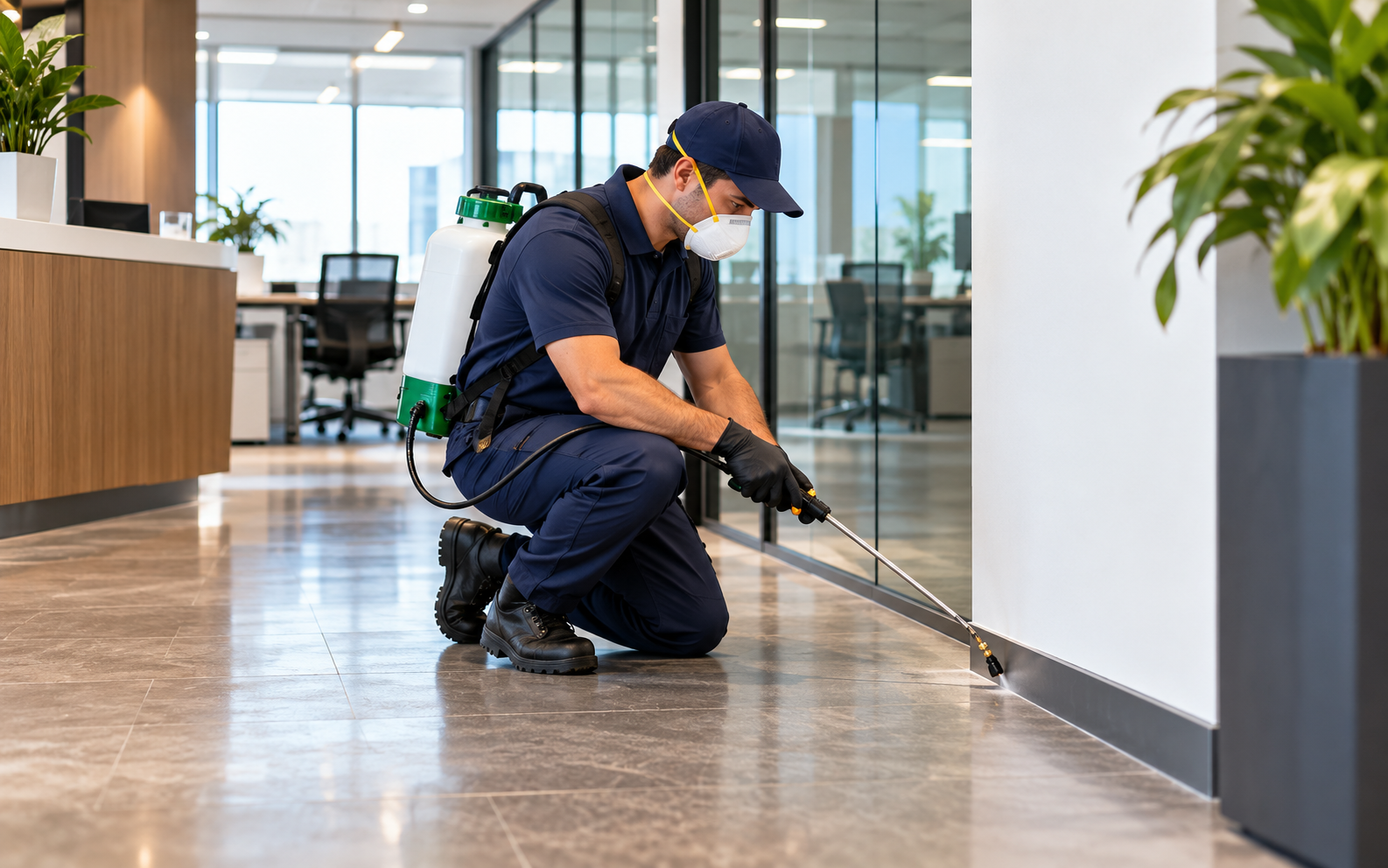
A good programme, like our commercial and industrial pest control service, works like a maintenance schedule, not an emergency call. It begins with a full inspection of the premises and a written plan. Treatment follows standard operating procedures and uses products suited to the pests and the setting, with attention to areas where food is handled. Regular monitoring and follow-up visits check whether activity is rising or falling, and the plan changes if it is not working.
For commercial clients, extras make a big difference: audits every six months with detailed reports, joint walkthroughs with your management team and department-wise training that teaches staff how to spot and report pests. Records matter as well, since they help when you face inspections, audits or questions from partners and customers.
A Seasonal Calendar for Commercial Pest Management
Pest activity follows the seasons, so your programme should too. In the hot months, flies, ants and cockroaches multiply quickly around food, waste and drains, so increase cleaning and monitoring in canteens, kitchens and loading areas. During the monsoon, check roofs, walls and wooden fittings for damp, remove standing water and watch for mosquitoes and termites. In cooler months, rodents look for warm, quiet spaces in stores, ceilings and equipment rooms, so seal gaps and review storage before temperatures fall. Whatever the season, keep your records up to date and review them with your provider.
A Pest Management Checklist for Managers
- Inspect storage, pantries, loading areas and roof spaces every month.
- Keep stock raised, with clear gaps from the wall so it can be inspected.
- Seal gaps around doors, pipes, vents and shutters.
- Cover waste bins, clean drains regularly and remove waste daily.
- Fix leaks and remove standing water in and around the premises.
- Check wooden fittings, shelves and doors for signs of termites.
- Keep a simple log of sightings, treatments and follow-up actions.
- Train staff to report problems immediately, without blame.
Choosing a Commercial Pest Control Provider
Look for a licensed provider that visits before it quotes, explains what it finds in plain language and schedules work around your opening hours. Ask how they handle food areas, what records and reports they supply and whether they provide audits and staff training. Be cautious about providers who offer a quote without visiting, promise results that sound too good or cannot explain the products they use.
Since July 2012, Dhiman Pest Control has supported businesses across the region, including pest control in Jammu through its branch for Jammu and Kashmir. We work under licence number P44/2014, follow written procedures at every site and share findings, audits and training with your management team. Talk to us on +91 98173 94140, and we will visit your premises, assess the risks and suggest a plan.
Common Questions Business Owners Ask About Pest Control in Jammu
1. Which pests cause the most damage to commercial properties?
Rodents, termites, cockroaches, flies and birds cause the most trouble. Rodents damage stock, packaging and wiring, termites attack wooden fittings and files, cockroaches and flies contaminate food areas, and birds foul entrances and roofs. The risks depend on what your business does, so an inspection of your premises shows where your biggest exposure lies.
2. How often should a commercial property have pest control?
There is no single schedule that suits every business. A small office may need little more than seasonal checks, while a food unit or a warehouse needs closer and more regular monitoring. A first inspection shows how exposed you are, and audits every six months help you adjust the plan as your business changes.
3. Can pest treatment be done without disrupting my business?
Usually, yes. Many commercial treatments, such as baiting, sealing and monitoring, can be done with minimal disruption, and visits can be planned around opening hours or quiet periods. A good provider will agree timings with you in advance, explain which areas need to be cleared and tell you when it is safe to resume normal work.
4. What records should a business keep for pest control?
Keep a file with inspection dates, what was found, what was treated, the products used and any follow-up actions. Audit reports, product data and MSDS sheets are also useful. These records help you answer questions from inspectors, partners and customers, and they show you which areas need repairs or better hygiene.
5. Who is responsible for pest control in a rented commercial space?
It depends on your lease and the building. In general, tenants are responsible for pests that arise from their own activities, while owners handle structural problems and shared areas. Pests move between units, so it helps to agree responsibilities clearly, report problems early and coordinate treatment with neighbouring tenants and the building management.