Pest control in a healthcare setting is different from pest control in a shop or a home. Patients may have weak immunity, areas must stay clean and calm, and some spaces cannot be treated in the usual way. That is why we choose methods carefully, apply them where they are needed and keep a clear record, instead of relying on broad, routine spraying. Each plan begins with an inspection of your facility.
Low-Disturbance Treatment for Sensitive Areas: Gel Baiting, Targeted Application and Sealing
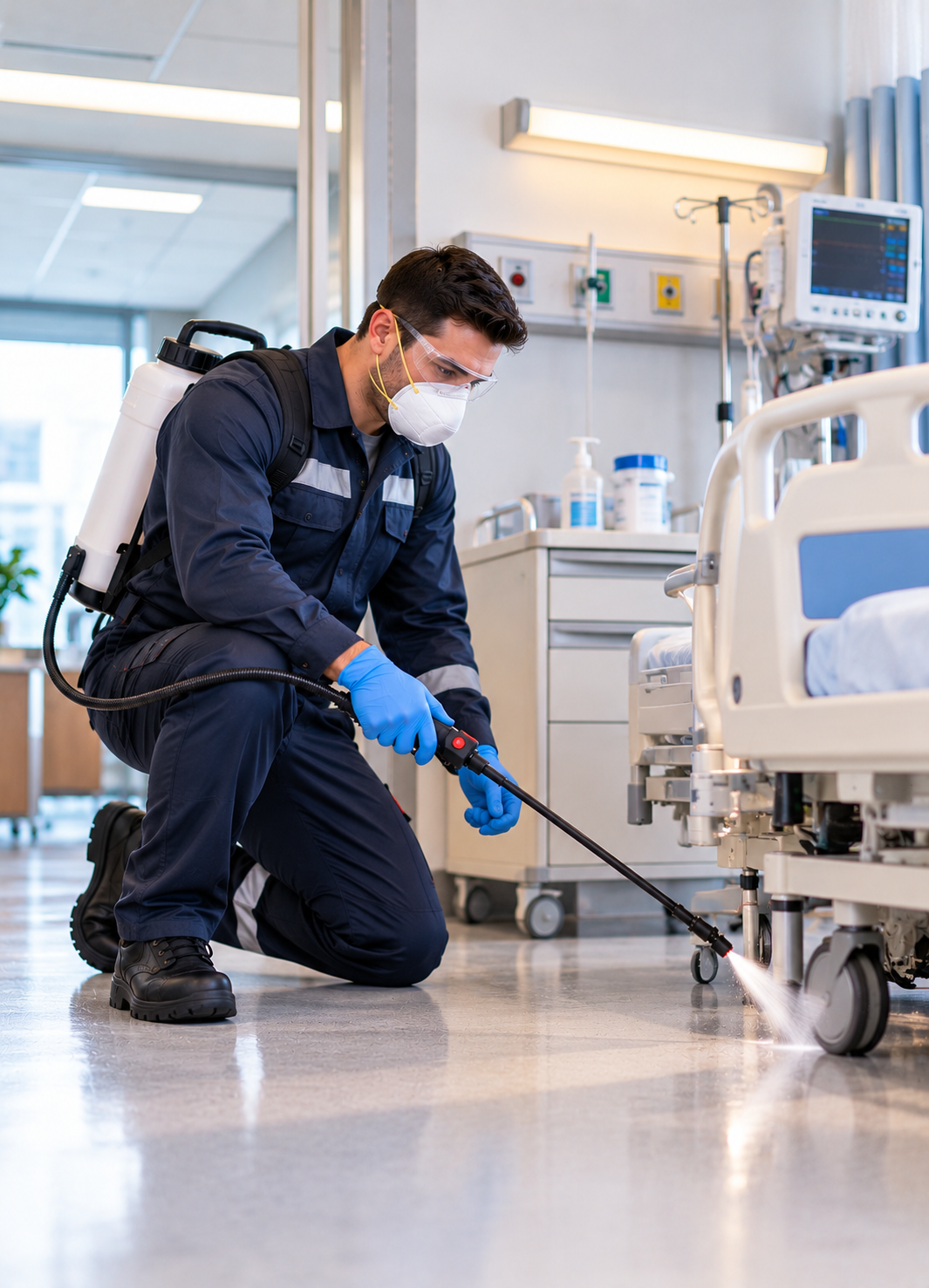
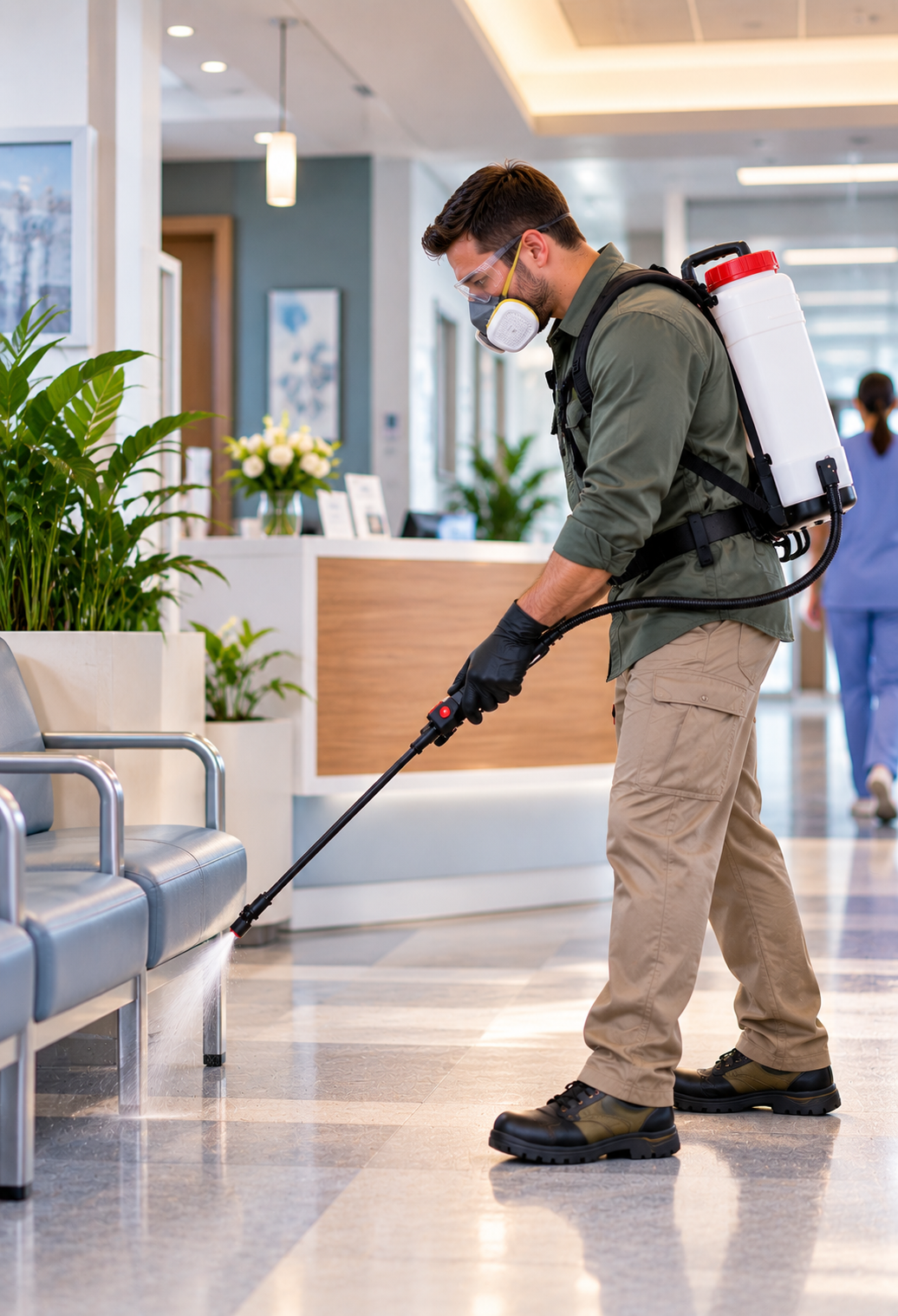
In sensitive areas, we prefer methods that are targeted and low in disturbance. Gel baiting, careful crack and crevice treatment and the sealing of gaps allow us to deal with crawling pests without broad spraying across patient areas. Every treatment is planned in advance with your team, so we know which areas need special care and which timings suit your operations. We keep disturbance to patients and staff as low as possible.
Controlling the Pests That Matter Most in Hospitals: Cockroaches, Flies, Ants and Rodents
The pests that matter most in hospitals are cockroaches, house flies, ants and rodents, with mosquitoes and pigeons adding to the list in outdoor and rooftop areas. Each is treated with the method that suits it, from gel baiting for cockroaches to baiting and traps for rodents, residual spraying for flies, fogging for mosquitoes and spikes or netting for birds. Our team explains the plan clearly, so there are no surprises.
Waste Areas, Drains and Outdoor Spaces: Where Hospital Pests Begin
Many hospital pest problems begin in waste storage areas, drains, canteens, stores and outdoor spaces, away from the wards. We inspect these points closely, recommend sanitation and storage improvements and treat the sources, so pests are stopped before they move into clinical areas. Regular monitoring checks that the controls are holding and shows where to adjust. This keeps clinical areas protected from the outside in.