House flies are efficient at one thing: finding food, moisture and warmth. They breed quickly in waste and damp organic matter, rest on walls, ceilings and window frames, and move in through doors and gaps whenever they open. Controlling them means working on three fronts at once: the flies that are present now, the places they rest and the sources that keep producing more of them. Each plan begins with an inspection.
Residual Spraying on the Surfaces Where Flies Land and Rest
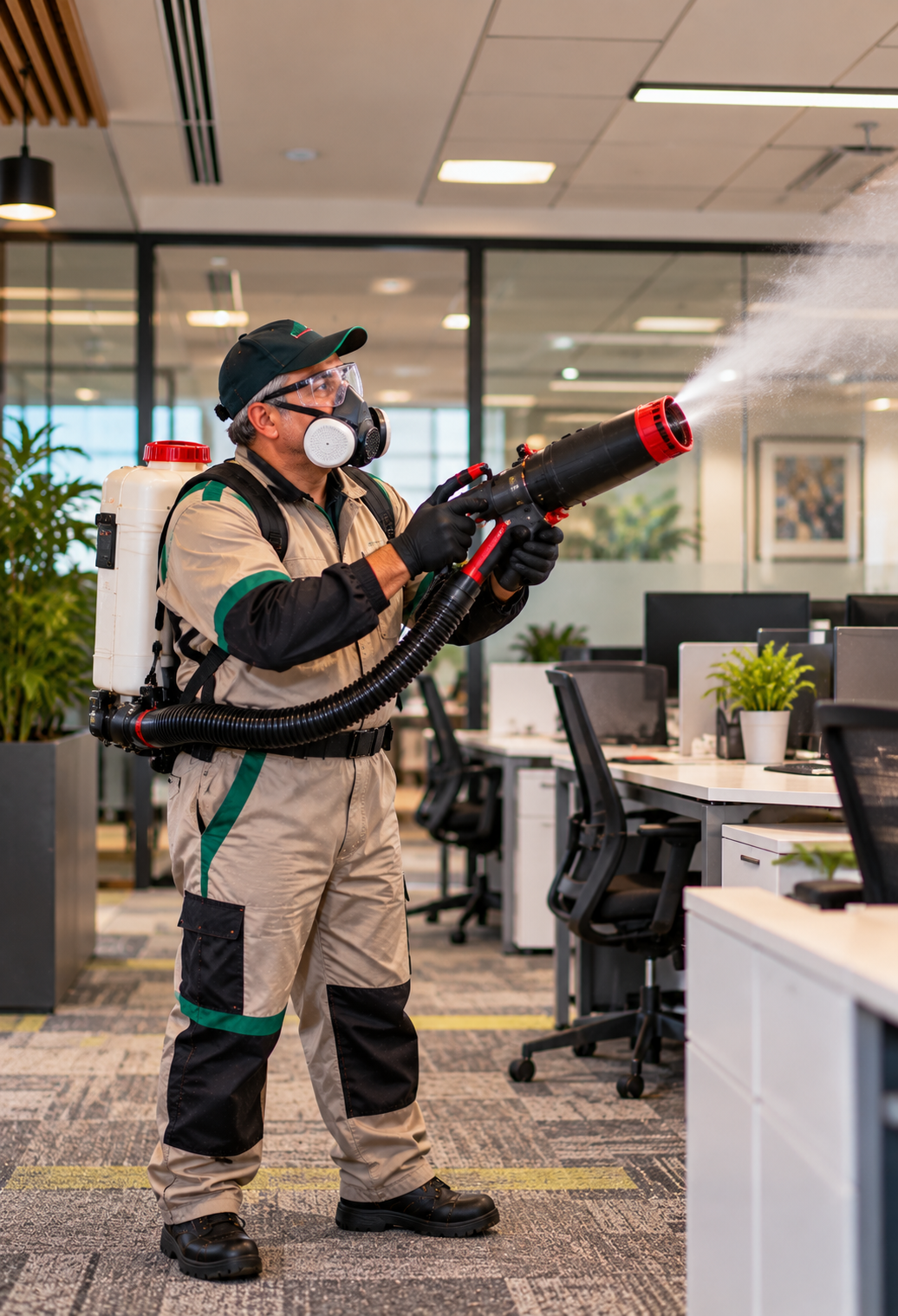
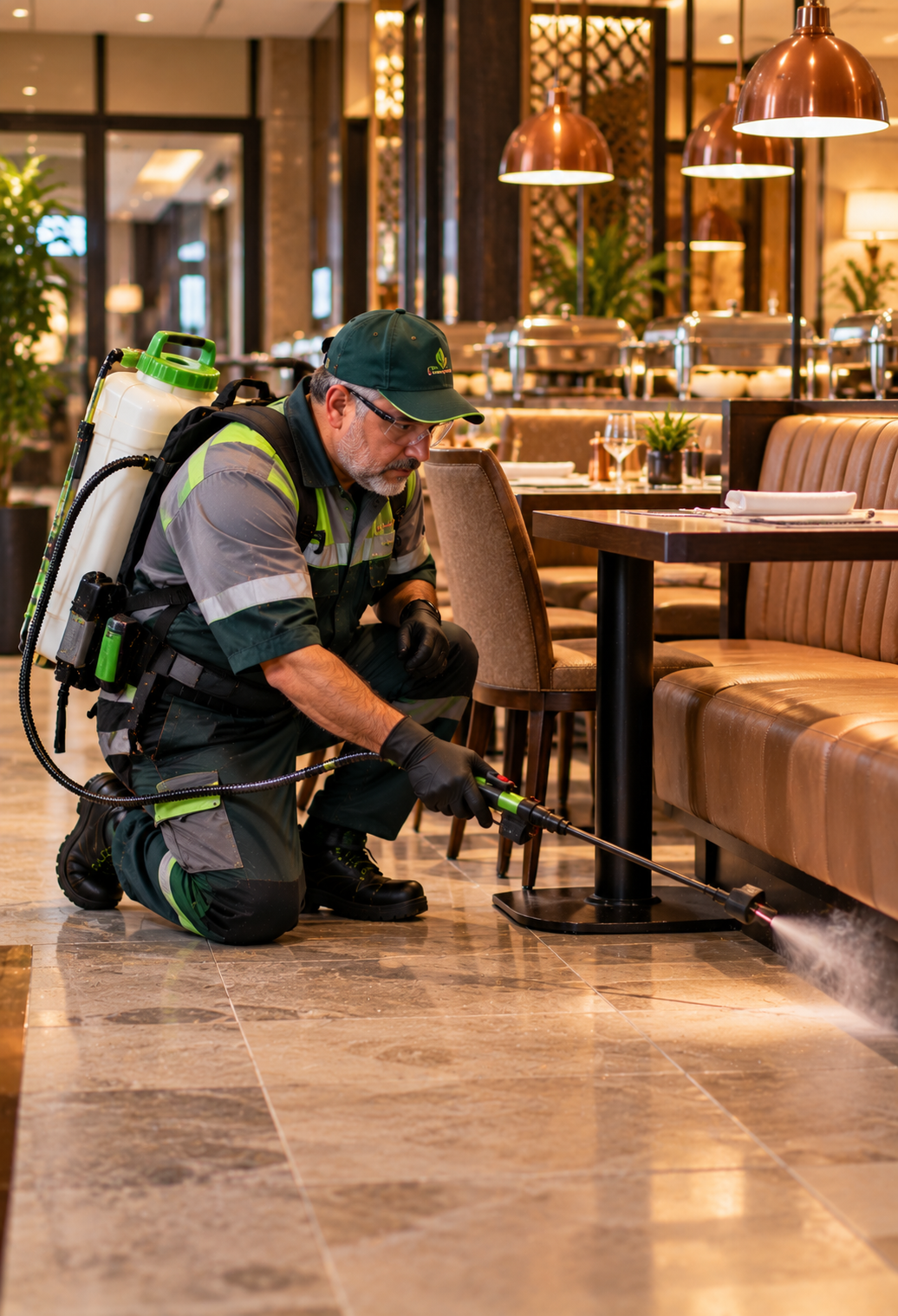
Flies spend much of their day resting on walls, ceilings, window frames, door edges and hanging fixtures, then returning to food and waste. Residual spraying treats these resting surfaces so that flies that land on them are affected over time, supporting the work of baits and sanitation. We apply the treatment carefully to the areas where flies gather, keeping food preparation and serving areas in mind throughout.
Baiting Treatment to Bring Fly Numbers Down
Baiting treatment gives us another way to bring fly numbers down, especially in places where spraying alone is not enough. Baits are placed in locations where flies feed and gather, such as near waste areas, loading points and drains, and they work alongside residual spraying to reduce the population. We monitor the baited areas on follow-up visits and adjust the placement according to what we find.
Finding Entry Sources and Breeding Spots Around Your Premises
Spraying and baits only go so far if flies keep finding a way in or a place to breed. Our technicians look for entry sources such as open doors, gaps, vents, windows and delivery points, and for breeding spots such as bins, drains, food waste and damp corners. We then recommend practical changes to sanitation and storage, so the source of the flies is addressed, not only the flies themselves, which makes the results last longer.